Category: Art Tips

  • 20 Shading Exercises for Beginners

    20 Shading Exercises for Beginners

    Simple practices that actually improve your drawings

    Shading is one of those things that looks intimidating… until you break it down into small, repeatable exercises.

    When I was starting out, shading was what made my drawings finally feel three-dimensional. You don’t need complicated techniques or expensive supplies — just consistency, patience, and the right kind of practice.

    These 20 beginner-friendly shading exercises are meant to be short, low-pressure, and effective. You can do one a day, or a few in a single session.


    Before You Start: Tools I Recommend

    You don’t need much to practice shading, but having a range of pencil hardness makes a huge difference.

    ✏️ STAEDTLER Mars Lumograph Sketch Set (6 Degrees)

    This is the pencil set I started with, and I still recommend it to beginners.
    It’s affordable, easy to find, and gives you a great range from light to dark — which is perfect for learning value control and smooth shading.
    👉 https://amzn.to/3Mm8nqw

    📓 Sketchbooks I Actually Use

    When practicing, I always suggest cheap sketchbooks from the dollar store. They remove the pressure of “wasting” good paper and let you experiment freely.

    Once you feel more confident, upgrading to something sturdier can feel really rewarding.

    Talens Art Creation Sketchbook
    This is what I personally use. It has a lot of pages, comes in different sizes and fun colours, lays flat, and the paper quality is great for pencils.
    👉 https://amzn.to/4rKwSha


    20 Shading Exercises for Beginners

    1. Gradient Bar

    Shade from light to dark in one smooth motion.
    This is the foundation of all shading.

    2. Value Squares

    Create 5–7 boxes, each slightly darker than the last.

    3. Pressure Control Lines

    Draw lines using increasing pressure from light to dark.

    4. Circle Shading

    Turn a flat circle into a sphere using light and shadow.

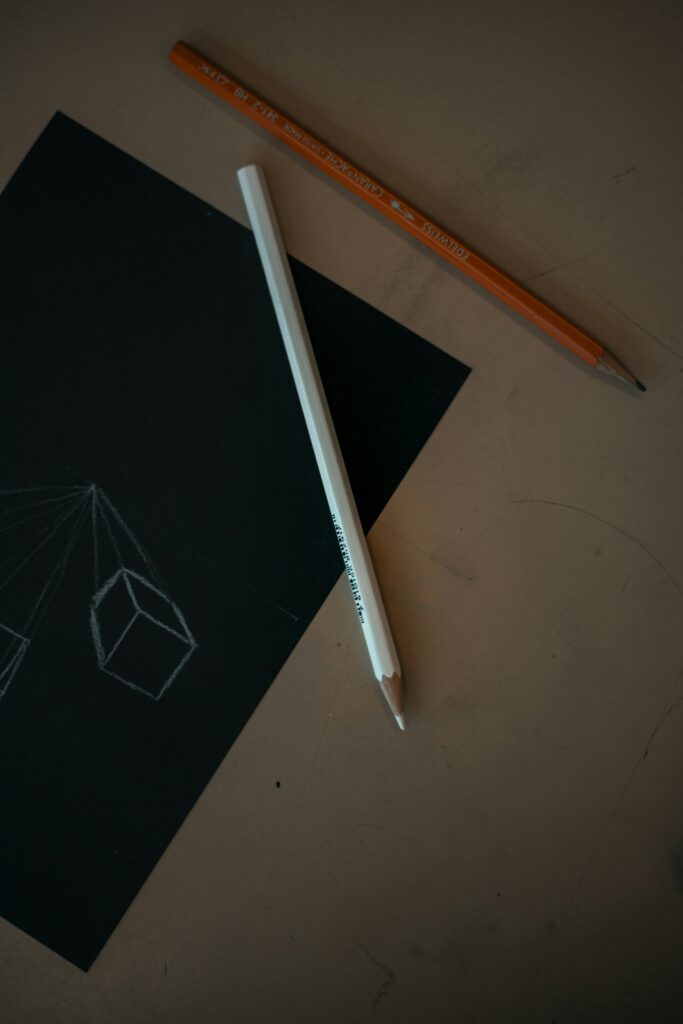
    5. Cube Shading

    Practice shading the three planes differently.

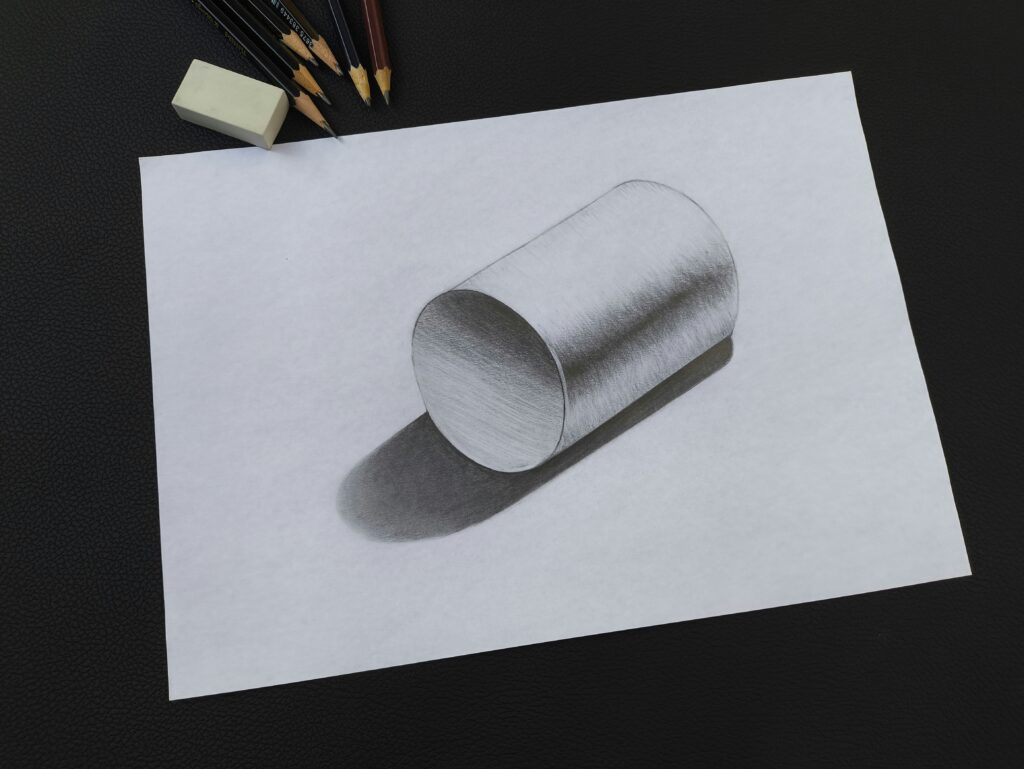
    6. Cylinder Shading

    Great for understanding rounded forms.

    7. Cone Shading

    Focus on smooth transitions.

    8. Cross-Hatching Scales

    Fill squares using only crossed lines.

    9. Single-Direction Hatching

    No crossing — just parallel lines.

    10. Scribble Shading

    Shade using loose, circular scribbles.

    11. Texture Squares

    Create small boxes and shade:

    • wood
    • fabric
    • metal
    • stone

    12. Shadow-Only Study

    Draw only shadows — no outlines.

    13. Light Source Practice

    Draw a simple object and shade it with:

    • light from above
    • light from the side
    • light from below

    14. Eraser Highlight Exercise

    Shade everything mid-tone, then erase highlights.

    15. Soft Edge vs Hard Edge

    Practice blending one side and keeping the other sharp.

    16. Sphere With Cast Shadow

    Add a shadow on the ground plane.

    17. Layering Exercise

    Build shading in 3 light layers instead of one dark one.

    18. Timed Shading (5 Minutes)

    Quick shading without overthinking.

    19. Reference-Based Shading

    Shade a simple photo in grayscale.

    20. Same Object, Three Values

    Shade the same object in:

    • light
    • medium
    • high contrast

    Why These Exercises Work

    These practices train you to:

    • control pencil pressure
    • see value differences
    • understand light direction
    • shade confidently without smudging

    And because they’re simple, you’re more likely to stick with them.


    A Gentle Reminder

    Shading isn’t about perfection — it’s about seeing.
    Every sketch, even the messy ones, teaches your eyes something new.

    Progress happens quietly.

  • 50 Quick Sketch Ideas You Can Finish in 10 Minutes

    50 Quick Sketch Ideas You Can Finish in 10 Minutes

    Sometimes the hardest part of drawing is simply starting. When you only have a few minutes, sketching becomes lighter—less pressure, more play. Here are 50 simple prompts that help you warm up your hand, sharpen your eye, and build real drawing fundamentals without needing a full art session.


    Before You Start

    If you want a smooth, reliable setup, I always recommend drawing with a good mechanical pencil and a sketchbook you actually enjoy opening. Two of my favourites:

    • Uni Mechanical Pencil Kurutoga Roulette Model — it’s a little heavy in the best way, feels stable in your hand, and the rotating lead mechanism keeps your lines sharp without constantly clicking. A workhorse that lasts forever.
    Affiliate link: https://amzn.to/4iSDHJO

    • Talens Art Creation Sketchbook — I’ve talked about this one before: thick pages, lies flat, and holds pencil beautifully without smudging everywhere. It’s sturdy but still lightweight enough to carry around.
    Affiliate link: https://amzn.to/4rKwSha

    Now—your sketch ideas:


    Warm-Up Lines & Shapes

    1. A page of straight lines (as straight as you can)
    2. Circles of different sizes
    3. A cube from different angles
    4. A cylinder and a cone
    5. Cross-hatching practice (30 seconds per direction)
    6. Tiny overlapping clouds
    7. A spiral that gradually gets wider
    8. A quick 3D staircase

    Everyday Objects

    1. Your phone
    2. Your water bottle
    3. A spoon
    4. A candle
    5. Keys
    6. A mug from above
    7. A scrunched-up paper
    8. A simple chair

    Nature Bits

    1. A single leaf
    2. A tiny flower bouquet
    3. A pebble
    4. A tree silhouette
    5. A seashell
    6. A feather
    7. A mushroom cluster
    8. A branch with berries

    Mini Character Practice

    1. A quick chibi of yourself
    2. Someone yawning
    3. Someone reaching for something
    4. A running pose
    5. A floating pose (weightless)
    6. Eyes-only page (different expressions)
    7. Hands holding something
    8. A silhouette of a character

    Textures (Great for Shading Practice)

    1. Fur
    2. Scales
    3. Tree bark
    4. Denim texture
    5. Clouds with soft edges
    6. Water ripples
    7. A brick wall
    8. A woven basket pattern

    Cozy Aesthetic Things

    1. A mug with steam
    2. A stack of books
    3. A window with curtains
    4. A candle jar
    5. A sweater sleeve
    6. A warm-looking sock
    7. An open journal
    8. A tiny plant in a pot

    Fun & Random

    1. A mythical creature (make it tiny)
    2. A random object made “cute” with eyes
  • 22 Mini Drawing Challenges to Level Up Your Art Skills

    22 Mini Drawing Challenges to Level Up Your Art Skills

    Short exercises. Tiny time commitments. Real growth.

    Some days you want to draw, but the thought of choosing a reference or setting up your desk feels impossible. Mini challenges are the cure — small, gentle prompts that fit into a busy life and still help you grow.

    These are the tiny challenges that helped me improve faster than anything else. They’re short, simple, and perfect for beginners or busy artists.


    1. 10 Lines, 10 Objects

    Pick 10 simple objects. Draw each using max 10 lines.
    Instant confidence booster.

    2. 30-Second Gesture Burst

    Set a timer. Quick gestures only.
    The quickest way to loosen up.

    3. One Page, One Shape

    Circles, squares, or triangles only.
    Trains control + consistency.

    4. The Wrong-Hand Challenge

    Use your non-dominant hand for 3 quick sketches.
    Forces pure observation.

    5. No-Lift Line Drawing

    Draw a small scene without lifting your pen once.
    Messy, magical, fluid.

    6. 5 Blind Contour Portraits

    Don’t peek. Just look at the subject.
    Teaches you to see, not guess.

    7. Shadow-Only Study

    Skip linework. Draw only shadows.
    Great for beginners learning values.

    8. 10 Hands in 10 Minutes

    Fast, imperfect, effective.

    9. Micro Reference Challenge

    Zoom out on the reference until it becomes blobby.
    Draw only the big shapes.

    10. One-Colour Day

    Choose one colour and stick to it.
    Limits decision fatigue.

    11. 3 Expressions in 5 Minutes

    Quick emotions → fast improvement.

    12. Draw the Same Object 3 Ways

    Simple → detailed → stylized.

    13. The 1 cm Challenge

    Draw something tiny in one square centimeter.

    14. Opposite Style Day

    Switch from realism ↔ cute.
    Breaks habits, builds range.

    15. Silhouette Swap

    Draw a silhouette, turn it into a character.

    16. 5-Line Portrait

    Minimalism = clarity.

    17. 3 Texture Study

    Metal, fabric, fur, wood.
    Spend 3–5 minutes on each.

    18. Fill-a-Corner

    Only fill one corner of your page.
    Instant composition practice.

    19. Draw Something Behind You

    Don’t turn fully. Just glance.
    Great for visual memory.

    20. Timed Perspective Boxes

    1 minute → 5 boxes → repeat.

    21. Daily Pocket Object

    Draw whatever’s in your pocket or bag.

    22. 2-Minute Character Thumbnails

    Tiny ideas. Zero pressure.


    My Recommended Tools for These Mini Challenges

    A good pencil genuinely makes practice more enjoyable — especially when you’re doing fast sketches.

    ✏️ Regular Graphite Pencils (Affordable & Beginner-Friendly)

    I started with the STAEDTLER Mars Lumograph Sketch Set (6 degrees), and I still recommend it to beginners.
    They have a great range of hardness for shading practice, and they’re super affordable.
    🔗 https://amzn.to/3Mm8nqw


    ✏️ Mechanical Pencils (My Personal Favorite)

    I use mechanical pencils now because they’re clean, sharp, and consistent — no sharpening needed.

    • Uni Kurutoga Roulette Model

    A little pricier, but heavier and premium-feeling.
    My favorite mechanical pencil I’ve used.
    🔗 https://amzn.to/4ozTcHu

    • Uni Kurutoga Standard Model

    More affordable but still amazing. Same feel, just lighter.
    🔗 https://amzn.to/4pfDFxT

    • Pentel GraphGear 1000

    Higher price-point, but very popular and great quality.
    🔗 https://amzn.to/48kwb6K


    ✏️ Leads I Recommend

    I like using lighter, harder leads like 3H or 2H so I can sketch cleanly without dark smudges.

    And for fun:

    • Red Lead (my favorite for sketching)

    Red blends beautifully under alcohol markers or oil pastels — you barely need to erase.
    🔗 https://amzn.to/4rGqFTt


    Mini challenges are perfect for days when you want to draw but don’t have much time or mental energy. Just pick one prompt, grab a pencil, and spend 5 minutes. You’ll still walk away better than before.

  • 25 Easy Sketch Ideas for Practicing Anatomy (Beginner-Friendly)

    25 Easy Sketch Ideas for Practicing Anatomy (Beginner-Friendly)

    Getting better at anatomy doesn’t require complicated figure studies or intense realism right away. Sometimes the best way to grow is through small, simple sketches that help you understand proportions, flow, and gesture without overwhelming yourself.

    These 25 beginner-friendly sketch ideas are perfect for short practice sessions — the kind you squeeze in after work, or during little pockets of free time. They’re designed to feel approachable and help you improve steadily.


    Before We Start: Choosing a Sketchbook for Anatomy Practice

    When practicing anatomy, I genuinely recommend cheap sketchbooks from the dollar store. You don’t have to worry about “wasting paper,” and it gives you space to experiment, make mistakes, and fill pages quickly. This is how I got better — fast and stress-free.

    But once you start improving and want something that feels sturdier and more enjoyable to draw in, here are two sketchbooks I personally love:

    Cantoo City A4 Sketchbook

    Amazon Link
    I love the thickness of this paper — it feels premium without being too precious. The best part is that it lays completely flat, which makes practicing anatomy so much easier. And since it’s made for dry media (pencil, charcoal, pastels, chalk), it handles sketching super well.
    I don’t like spiral sketchbooks, so this one is such a good alternative.

    Talens Art Creation Sketchbook (My everyday pick)

    Amazon Link
    This is what I personally use all the time. It comes in so many different sizes and fun colours, the paper quality is reliable, and it has a 80 sheets — meaning you don’t feel bad about filling it quickly. It’s a great upgrade sketchbook when you’re ready for something nicer but still practical. It also lays flat which I love!


    25 Easy Anatomy Sketch Ideas (Beginner-Friendly)

    Upper Body & Torso

    1. Simple front-facing torso (just ribcage + hips)
    2. Side profile torso
    3. Back muscles simplified into shapes
    4. Torso twisting slightly left or right
    5. Leaning forward pose (very beginner-friendly)

    Arms & Hands

    1. Arm bent at 90°
    2. Straight arm with hand relaxed
    3. Muscles simplified into cylinders
    4. Hands holding a cup
    5. Hands in a “peace sign” pose

    Legs & Feet

    1. Standing leg (front view)
    2. Bent leg from a sitting pose
    3. Side-view thigh + calf
    4. Foot pointing downward
    5. Foot from a 3/4 top angle (easier than it sounds)

    Full Body (Simple)

    1. A walking silhouette
    2. Sitting pose from the side
    3. Stretching pose (arms up)
    4. Jumping / mid-air gesture
    5. Kneeling pose

    Anatomy Details

    1. Shoulder studies (3 angles)
    2. Ribcage simplified into an egg shape
    3. Pelvis simplified into a bowl shape
    4. Head + neck connection
    5. Legs in motion (3 small thumbnails)

    How to Get the Most Out of These Prompts

    1. Keep it small and loose

    Anatomy is easier when you’re not precious about it. Draw tiny! It helps you focus on gesture and proportion instead of perfection.

    2. Don’t spend more than 5–10 minutes per sketch

    The goal is volume, not polished pieces.

    3. Use references when needed

    Pinterest, figure drawing sites, or your own selfies — all good.

    4. Study shapes, not details

    Think cylinders, spheres, blocks. That’s how anatomy starts to “click.”

    5. Fill a spread, not a page

    Cluster your sketches together. It feels more fun and less intimidating.


    Anatomy can be overwhelming at first, but breaking it down into simple shapes and quick studies makes the learning process so much easier — and way more enjoyable.

    Grab a cheap sketchbook to get started, and when you’re ready for a nicer upgrade, both the Cantoo City A4 Sketchbook and the Talens Art Creation Sketchbook are perfect choices depending on your budget and style.

  • 31 Drawing Prompts to Improve Your Line Work

    31 Drawing Prompts to Improve Your Line Work

    Linework is one of the fastest ways to level up your art — even before shading or colour.

    When your lines feel confident, clean, and intentional, everything you draw instantly looks more polished.

    Tip: I personally recommend practicing linework in pen — it forces you to commit and helps you improve faster without worrying about erasing.

    I’ve tried so many pens, but my absolute favorite for this is the Zebra Sarasa Clip 0.5 Black Pen. The ink flows beautifully and the feel of the pen just clicks with linework practice.

    Another great option, which I try to save mostly for finished artwork, is the Sakura Pigma Micron Fineliner Pens. They’re excellent for line control practice too, just keep in mind that they’re more expensive. I like to save them for actual art pieces, but still good to practice with.

    Here are 31 simple prompts that actually help you improve your linework.

    Line Confidence Prompts

    These build control, smoothness, and steadiness.

    1. Draw 20 straight lines without a ruler
    2. Draw 20 smooth curved lines
    3. Fill a page with parallel lines (even spacing)
    4. Practice long, continuous strokes (no lifting!)
    5. Draw overlapping “S” curves
    6. Make a page of straight-to-curved line transitions

    Pressure Control Prompts

    Light vs. heavy pressure is a game changer.

    1. Draw 10 objects using only light pressure
    2. Draw the same objects using bold, heavy lines
    3. Make a gradient from super-light to super-dark lines
    4. Draw a leaf using only thin lines
    5. Draw the same leaf using thicker, expressive lines
    6. Outline a shape with lines that go from thin → thick

    Line Flow Prompts

    These help your lines feel smooth and beautiful.

    1. Draw long flowing hair strands
    2. Draw wind or smoke-like curves
    3. Draw fabric folds with continuous lines
    4. Draw waves or looping lines
    5. Draw simple clouds using one continuous stroke
    6. Redraw a simple object using only long, fluid lines

    Line Weight Prompts (Super Important for Stylization)

    Line weight = depth + style.

    1. Draw a simple character using varied line weight
    2. Outline a fruit with heavy outer lines, light inner ones
    3. Draw overlapping shapes using thicker lines in front
    4. Draw a plant with thin outlines + thicker shadows
    5. Draw a still life with heavier bottom edges (to “ground” it)
    6. Trace over your own drawing, adding line weight intentionally

    Applied Linework Prompts (Fun + Skill Building)

    A mix of drawing ideas that force you to introduce confident lines.

    1. Draw a flower using only 30 lines
    2. Draw a shoe with clean, purposeful strokes
    3. Draw a hand silhouette in one continuous line
    4. Draw 5 simple faces with minimal linework
    5. Draw a leaf using only contour lines (no shading)
    6. Draw a building using straight lines only
    7. Redraw an old drawing but with clean, deliberate lines

    Linework is a skill that grows quickly with consistent, bite-sized practice. Even doing 1–2 of these prompts a night will sharpen your control, confidence, and style.

    It’s one of the easiest art habits to fit into a busy life — no mess, no cleanup, just a pen and a few minutes of focus.

  • A Simple Creative Ritual for Busy Artists

    A Simple Creative Ritual for Busy Artists

    Most evenings, by the time I finish work, eat dinner, go to the gym, shower, and grab a snack, it’s already 9 p.m. That leaves me with maybe two precious hours — a tiny window that could easily disappear to scrolling or exhaustion.

    For a long time, I used that as proof that I “didn’t have time” for art.
    But the truth is: I do have time. I just needed a ritual built for the life I actually live.

    Here’s how I made creativity feel possible even on my busiest days — and how I turned two hour pockets into something soft, steady, and deeply fulfilling.


    1. I Pick Mediums With Easy Cleanup

    When you only have two hours, the setup matters just as much as the drawing.

    I learned to choose tools that don’t steal time from the actual art:

    • pencil
    • alcohol markers
    • paint markers
    • oil pastels

    These are my weekday mediums — quick to start, quick to clean, and calming to use.

    Heavy-cleanup supplies like watercolour or gouache?
    Those are weekend luxuries. Slow mornings, long afternoons, roomy hours. I protect my weeknights by keeping them simple.

    This one shift alone made my ritual sustainable.


    2. I Prepare My References Before I Even Sit Down

    The biggest time-waster in art?
    Sitting at your desk, finally ready to draw… and then losing 20 minutes deciding what to draw.

    I refuse to let that happen anymore.

    So I prepare my inspiration earlier in the day, when I’m already doing other things:

    • On the treadmill, I watch art tutorials
    • During lunch or slow moments at work, I save Pinterest references
    • Between sets at the gym, I collect poses, moods, and ideas

    By the time 9 p.m. comes, I’m not searching — I’m starting.
    And that difference is everything.


    3. I Set Micro-Goals That Fit Into My Energy

    Consistency gets easier when I shrink my goals to match my capacity.

    I don’t tell myself, “I’m going to finish a whole piece tonight.”

    Instead I say things like:

    • “Today, I’ll finish the sketch.”
    • “Tomorrow, I’ll set down the base colours.”
    • “Tonight, I’ll just practice shading noses.”

    These small steps create momentum.
    And momentum creates consistency.

    It also keeps me from burning out or giving up when I’m tired.


    4. I Structure My Art Like Training — Small Challenges, Every Session

    I like improving. I like getting better. I like the challenge, even when it frustrates me.

    So I treat my creative ritual like a workout routine:

    • some days I aim for something slightly harder
    • some days I go back to basics
    • some days I purposely stretch my skills
    • some days I allow myself a comfort drawing

    That balance — pushing but not punishing — is how I learned so quickly.

    Recently I’ve been practicing semi-realism, but if I don’t have the energy, I go back to drawing anime characters or manhwa styles. These were my roots, and they still feel fun, light, and familiar.

    Improvement doesn’t disappear just because the difficulty changes.
    As long as you’re drawing, you’re growing.


    5. I Make the Ritual Something I Genuinely Look Forward To

    Even with a practical system, a ritual won’t last unless it feeds your heart too.

    So I make mine feel soft and inviting:

    • cozy lighting
    • a warm drink
    • clean desk
    • quiet music
    • everything within reach

    It’s never rigid.
    It’s never harsh.
    It’s a tiny pocket of the day that belongs just to me.

    Even when I’m tired, this softness pulls me back in.


    Final Thoughts

    Your art doesn’t need endless free time, perfect inspiration, or a quiet life.
    It just needs a system built around the life you already have.

    When you choose easy-cleanup mediums, prepare reference material ahead of time, set small goals, and allow your creativity to shift with your energy… your ritual becomes something you can actually stick to.

    It becomes less of a routine and more of a devotion — something steady, gentle, and yours.

  • 29 Drawing Ideas for Beginners (That Actually Help You Improve)

    29 Drawing Ideas for Beginners (That Actually Help You Improve)

    If you’re just getting into drawing, don’t worry about making perfect art — focus on learning how things work. These prompts help you practice shapes, shading, anatomy, and perspective, while keeping things fun and pressure-free. Grab your sketchbook, pick a few each week, and watch your skills grow.

    1. Start with Shapes

    1. Draw a still life using only circles, squares, and triangles.
    2. Sketch everyday objects (like cups or bottles) as simple 3D forms.
    3. Try shading a cube, sphere, and cylinder using one light source.
    4. Combine basic shapes to build something more complex — like a teapot or shoe.

    2. Practice Light & Shadow

    1. Shade a crumpled paper or cloth to practice texture.
    2. Draw the same object under soft light and harsh light.
    3. Try using cross-hatching for one drawing and blending for another.
    4. Create a gradient from light to dark using just your pencil pressure.

    3. Learn Proportion & Perspective

    1. Sketch your hand from three angles — palm, side, and holding something.
    2. Draw a simple chair or table using one-point perspective.
    3. Try drawing a hallway or room corner with two-point perspective.
    4. Sketch a person or animal using only basic shapes to get proportions right.

    4. Build Anatomy Confidence

    1. Do 5 quick 30-second gesture drawings (focus on movement, not detail).
    2. Draw heads using the Loomis method or simple oval guides.
    3. Practice drawing facial features individually — eyes, noses, lips, ears.
    4. Sketch hands in different poses, even if they look weird at first.
    5. Try feet — no one likes them, but they’re great for learning structure.

    5. Explore Form & Texture

    1. Draw metallic, glass, and fabric objects to understand material differences.
    2. Sketch something shiny and try to capture its reflections.
    3. Study how shadows curve around round vs flat objects.
    4. Try line-weight variation — use lighter lines for distant areas, darker for close.

    6. Boost Creativity & Confidence

    1. Redraw a past sketch to see your improvement.
    2. Turn a random doodle into a full character.
    3. Pick three random words and combine them into one drawing (ex: “cat,” “cloud,” “coffee”).
    4. Draw your favorite object from memory, then check accuracy.
    5. Copy a master artist’s sketch to learn their stroke confidence.
    6. Draw your favorite food realistically, then as a cartoon.
    7. Create a self-portrait with exaggerated features or mood.
    8. Fill one page with circles, lines, and shading practice — your warm-up ritual.